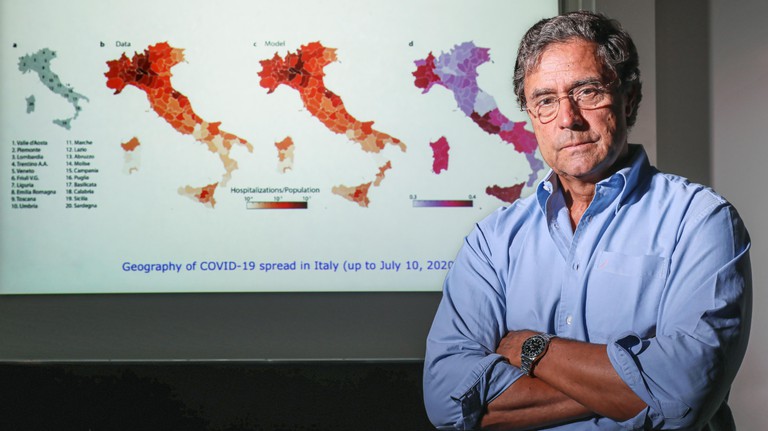
The Laboratory ECHO has been established in 2008 under the direction of Prof. Andrea RINALDO.
It replaced the laboratory HYDRAM.
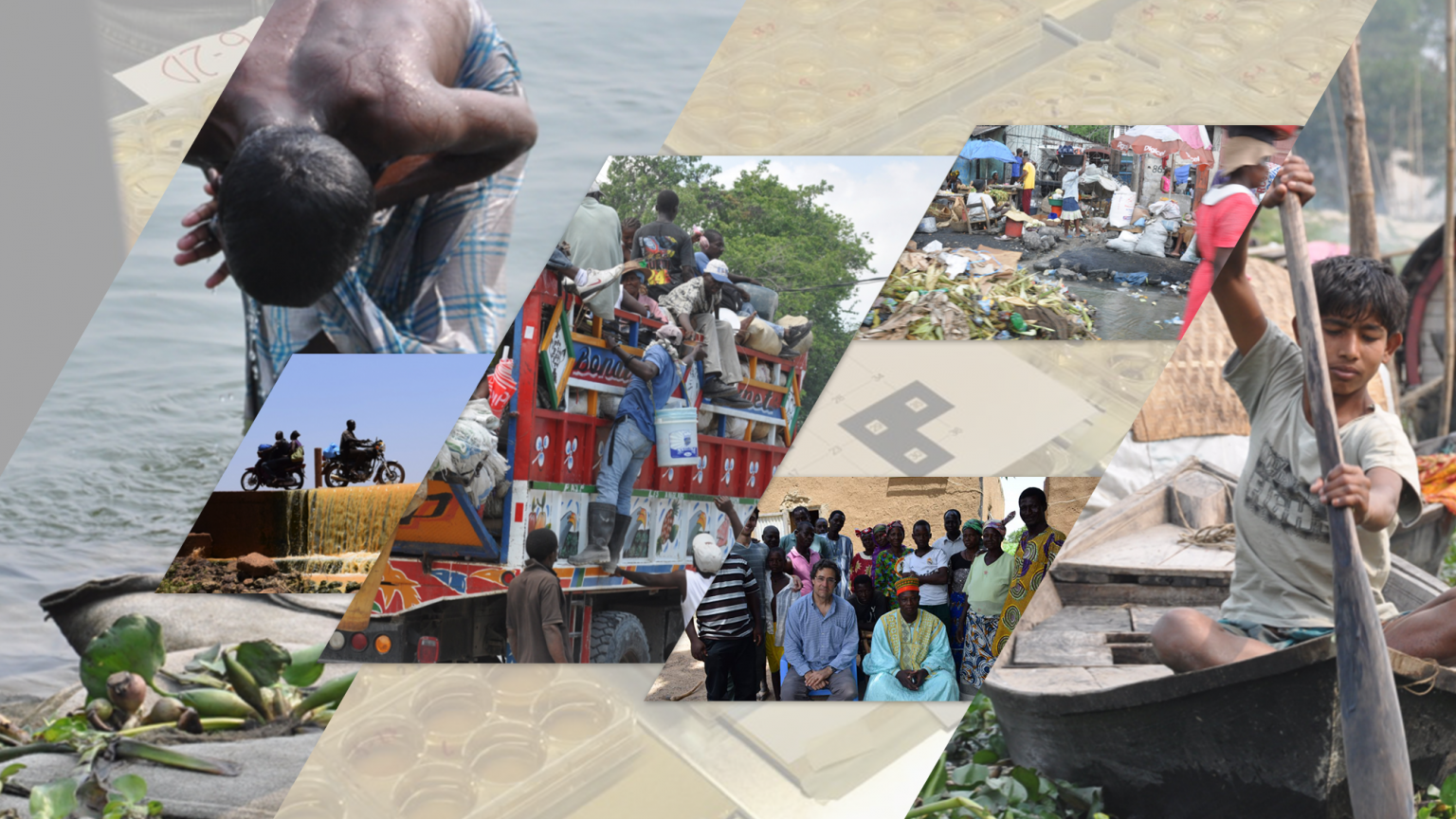
ECHO focuses on research at the interface of hydrology, geomorphology and ecology under an integrated framework of analysis with an aim for a general theory. It addresses a wide range of related topics, including biodiversity of freshwater fish in river networks and vegetation along riparian systems, how river networks affected historic spreading of human populations, and how they influence the spreading of water-borne diseases. The general project on river networks as ecological corridors for species, populations and pathogens of water-borne disease was granted an ERC Advanced Grant in 2008, thus defining a fundamental line of activity for the next four years.
Given the commonalities among various dendritic structures and despite the variety and complexity of the ecosystems involved, an integrated line of research is pursued at ECHO addressing the above and related topics through a unique, coherent ecohydrological thread and similar mathematical methods. Metacommunity and individual-based models are studied in the context of hydrochory, population and species migrations and the spreading of infections of water-borne diseases along the ecological corridors defined by the peculiar geomorphic features of river basins. A general theory, field and numerical work are sought on the effects of dendritic geometries on the ecological processes and dynamics operating on river basins that will hopefully establish a new significant scientific branch. Insights provided by such a theory will lend themselves to issues of great practical importance such as integration of riparian systems into large-scale resource management, spatial strategies to minimize loss of freshwater biodiversity, and effective prevention campaigns against water-borne diseases.
To achieve its objectives, the ECHO Lab hosts the activities of Prof. Rinaldo in collaboration with students and Postdocs in the following areas:
spatially explicit models of cholera spreading (Enrico Bertuzzo, Lorenzo Righetto)
species lifetimes in networked environments (Enrico Bertuzzo, Samir Suweis)
zebra mussel spreading in river networks (Lorenzo Mari, Enrico Bertuzzo)
ecohydrological flow duration curves (Serena Ceola, Samir Suweis, Enrico Bertuzzo)
theory of the hydrologic response (Cara Tobin, Ludovico Nicotina, Enrico Bertuzzo, Samir Suweis)
the MINERVE project (Cara Tobin, Ludovico Nicotina)
basin-scale transport phenomena (Enrico Bertuzzo, Ludovico Nicotina)
probabilistic dynamics of soil salinity (Samir Suweis)
|
Predicting spacial similarity of freshwater fish biodiversity |
On neutral metacommunity patterns of river basins at different scales of aggregation
|
Universal scaling of optimal current distributions in transportation networks |
Interferences from catchment-scale tracer circulation experiments
|
On spatially explicit models of cholera epidemics |
On the Geographic Range of Freshwater Fish in River Basins |
River Networks as Ecological Corridors: a Complex Systems Perspective for Integrating Hydrologic, Geomorphological and Ecologic Dynamics |
Sandro Azaele, Rachata Muneepeerakul, Amos Maritan, Andrea Rinaldo, and Ignacio Rodriguez-Iturbe
|
Matteo Convertino, Rachata Muneepeerakul, Sandro Azaele, Enrico Bertuzzo,Andrea Rinaldo and Ignacio Rodriguez-Iturbe |
Filippo Simini, Andrea Rinaldo, and Amos Maritan |
G. Botter, E. Milan, E. Bertuzzo, S. Zanardo, M. Marani, A. Rinaldo
|
E. Bertuzzo, R. Casagrandi, M. Gatto, I. Rodriguez-Iturbe and A. Rinaldo |
Bertuzzo, E., R. Muneepeerakul, H. J. Lynch, W. F. Fagan, I. Rodriguez-Iturbe, and A. Rinaldo |
Rodriguez-Iturbe, I., R. Muneepeerakul, E. Bertuzzo, S. A. Levin, and A. Rinaldo |